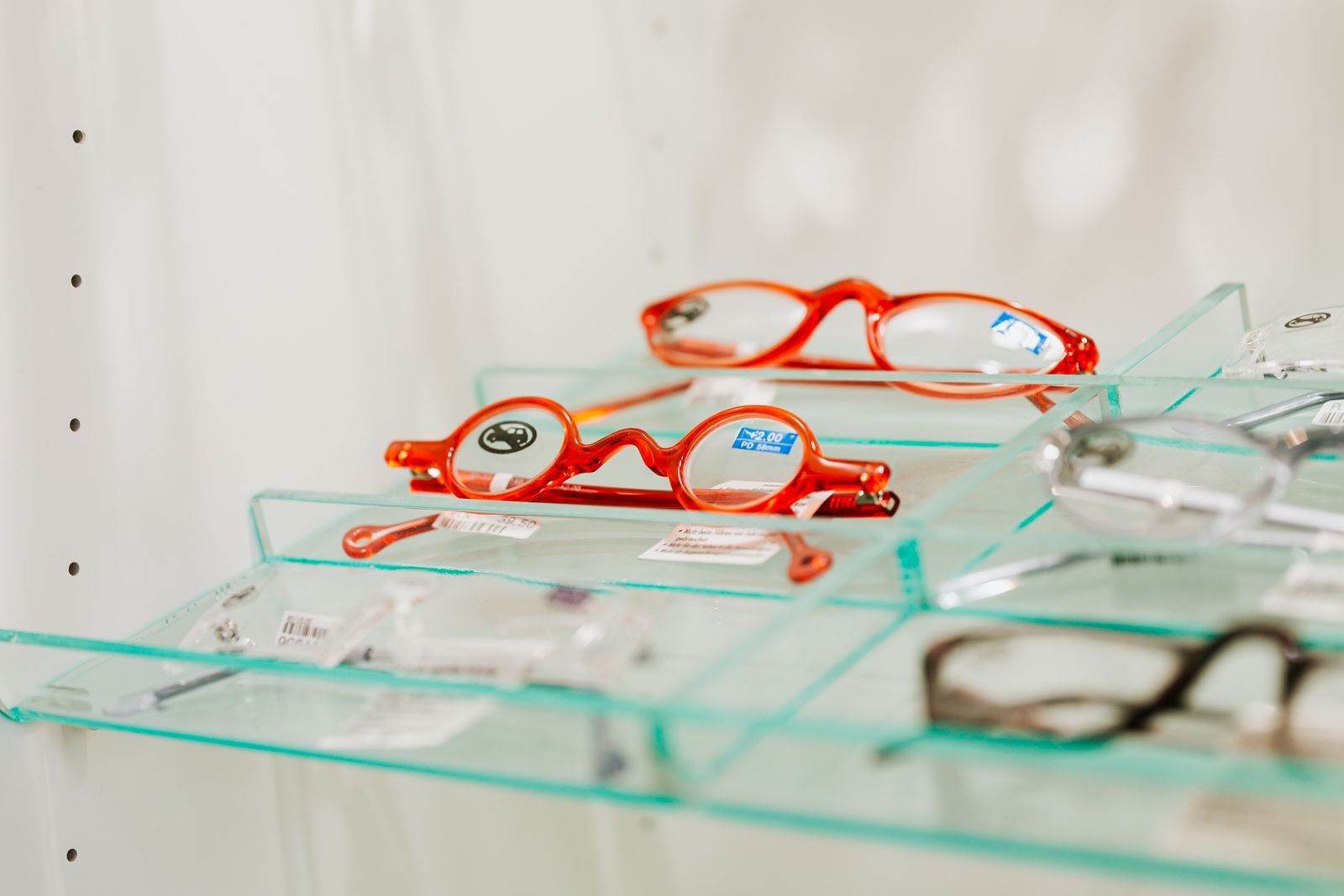
Walk into most optometry dispensaries and you're looking at tens of thousands of dollars of capital sitting on lucite — much of it slowly aging into unsellability while the practice reorders whatever the rep suggested. Optical inventory is the largest working-capital commitment in an independent eye care practice, and it deserves the same discipline a retailer would give it.
If your practice is weighing remote support, our guide to virtual assistants for optometry practices covers the roles, training and cost in one place.
Know your turn rate — the number that runs the board
Inventory turn = frames sold per year ÷ average frames on the board. Independent optical turns typically run between 1 and 2; well-managed boards push 2.5–3. The difference is enormous: a 700-frame board turning 1.2 sells 840 frames a year; the same board curated to 500 frames turning 2.5 sells 1,250 — with less capital tied up. More frames is not more sales; more of the right frames, seen more easily, is.
Build the board like a planogram, not a museum
- Segment by price tier and audience — value, mid, premium, luxury; men's, women's, unisex, kids — and allocate board space to match your actual sales mix, not your aspirations. Most practices discover their board over-represents what the buyer likes and under-represents what patients buy.
- Give bestsellers real estate. Eye-level, well-lit, multiple colorways of proven sellers. The bottom row of a back board is where frames go to age.
- Set a same-day restock rule. A sold bestseller reordered same-day is a sale waiting to repeat; reordered 'when the rep visits' is a hole in the board for six weeks.
Consolidate vendors deliberately
Every additional vendor adds minimums, reps, invoices, and return-policy complexity. Most independent optometry dispensaries do better with fewer, deeper vendor relationships: better discounts, better return-swap privileges on slow movers, and one rep who actually knows your board. Review annually: any line under a defined sales threshold gets cut or swapped, regardless of how much the team likes the rep.
Run the aging report ruthlessly
Tag every frame with its arrival date. At 9–12 months unsold: move it, mark it down, bundle it into second-pair offers, or return-swap it if your vendor allows. A frame that hasn't sold in a year has told you everything you need to know. Practices that run a quarterly aging purge keep the board fresh and the capital working — and fresh boards measurably lift revenue per patient through capture rate.
The counting problem, solved cheaply
None of this works without accurate data, and accurate data means somebody maintains it: receiving frames into the system, reconciling physical counts monthly, running the aging and turn reports, flagging reorder points, and processing vendor returns. That's steady administrative work that doesn't require an optician's dispensing skills — which is why optometry practices increasingly hand the tracking layer to a trained eye care virtual assistant at a flat $10/hour, keeping opticians with patients instead of spreadsheets. Ophthalmology dispensaries run the identical playbook. The board is a store; run it like one.