Job titles in eye care conceal more than they reveal, and "optometric technician" conceals one of the most varied jobs in the building — a role that spans from checking your vision to imaging your retina to teaching a teenager how to touch their own eye without flinching. Here's the actual task inventory, plus where the role is heading.
If your practice is weighing remote support, our guide to virtual assistants for optometry practices covers the roles, training and cost in one place.
The pretest battery
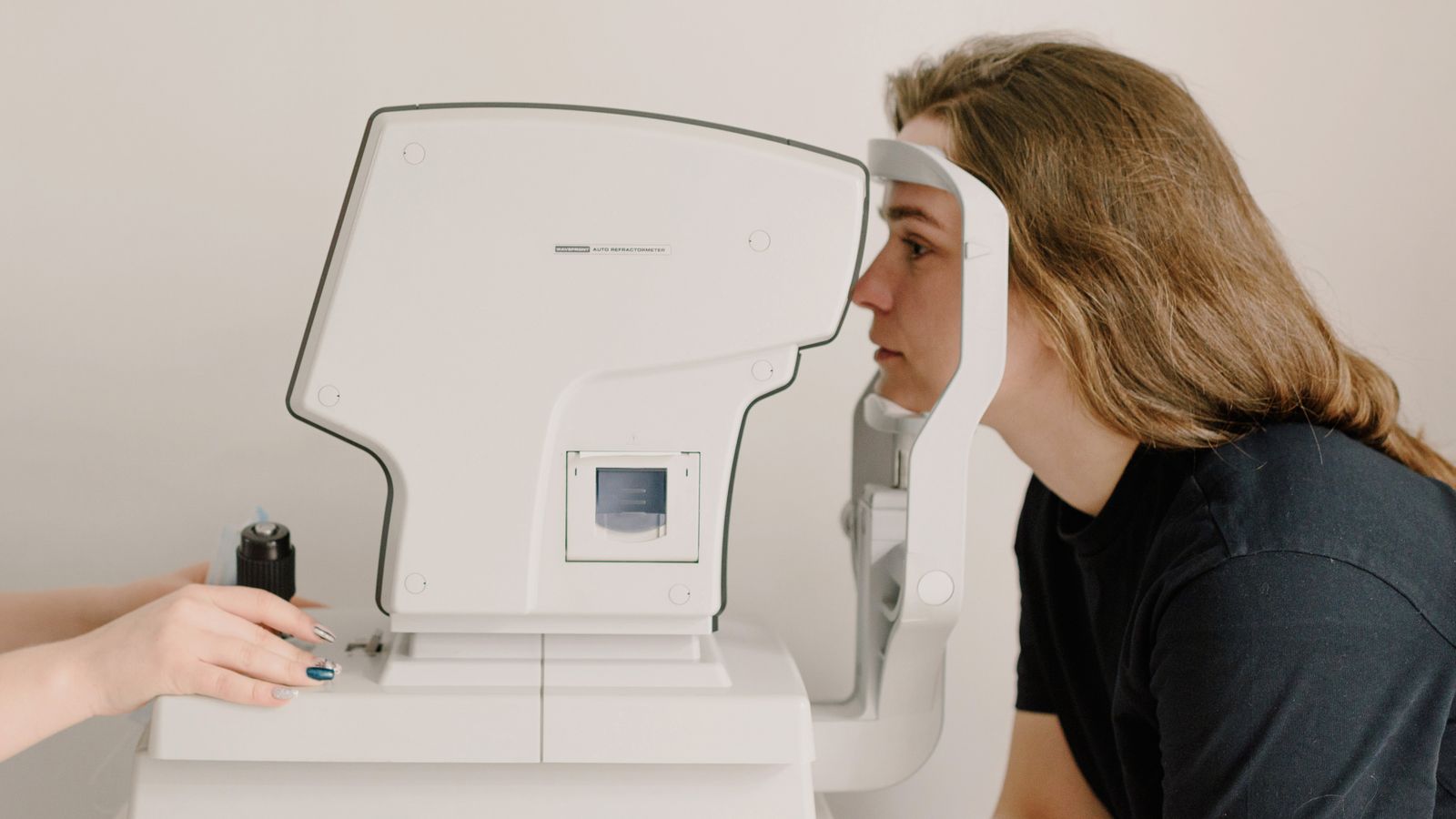
The technician's signature territory: everything that happens between the waiting room and the doctor. Case history and chief complaint. Visual acuities, with and without correction. Autorefraction and lensometry (reading the patient's current glasses). IOP — the puff, or increasingly iCare tonometry. Color vision, stereopsis, pupil checks as the practice's protocol dictates. Done well, this battery compresses the doctor's exam to its highest-value minutes; done sloppily, it gets redone in the lane and saves nothing. The difference between those outcomes is the technician.
Advanced diagnostics
The rung that separates experienced technicians: visual field testing (running a clean, artifact-free field is a genuine skill — ask anyone who's interpreted a bad one), OCT capture of macula and nerve, corneal topography, fundus photography, pachymetry. In medically oriented practices these tests carry the glaucoma, retina, and dry-eye workflows, and the technician who produces reliable data across all of them becomes, functionally, the practice's diagnostic department.
Contact lens duties
Insertion and removal teaching — the patience-intensive rite of passage for every new wearer — plus care instruction, trial lens handling, and in some practices preliminary fit assessments under the doctor's protocol. Practices with specialty lens clinics (sclerals, ortho-k) train senior technicians into fitting-support roles that approach subspecialty work.
The medical workup
In practices building their medical side — which is most of them — the technician increasingly owns the front half of medical visits: focused histories for red eyes and flashes-and-floaters presentations, drop instillation and dilation, testing sequences matched to the presenting complaint. This is where the role's ceiling keeps rising, and where our technician salary guide locates the pay premium: the tech who can take a medical patient from check-in to doctor-ready is the scarcest version of the role.
What's leaving the job — and why that's good news
Historically the technician job description ended with a fatal phrase: "...and other duties as assigned," which in practice meant phones, scheduling, verification holds, and recall lists between patients. That administrative residue is draining out of the role in well-run practices — not out of kindness, but arithmetic: technician hours are scarce and clinically expensive, desk hours are neither, and dedicated remote administrative staff now absorb the desk work at a fraction of the cost (the delegation logic our staffing series maps in detail). The result is a technician role converging on its clinical core — which is simultaneously the version practices get the most value from, the version that earns the most, and the version people actually took the job to do.
Is it a good job?
An honest yes, with a legible ladder: entry on attitude, skills trained on the job, certification (the CPO-to-CPOT sequence in our paraoptometric guide) converting skills into wage steps, and exits upward into scribing, opticianry, practice management, or subspecialty technician work. Demand has outrun supply for years and shows no sign of reversing. For someone who wants healthcare work with patient contact, visible skill growth, and no six-figure degree as the price of entry, it's one of the best-kept doors in the field — increasingly, into a job that's finally allowed to be fully clinical.