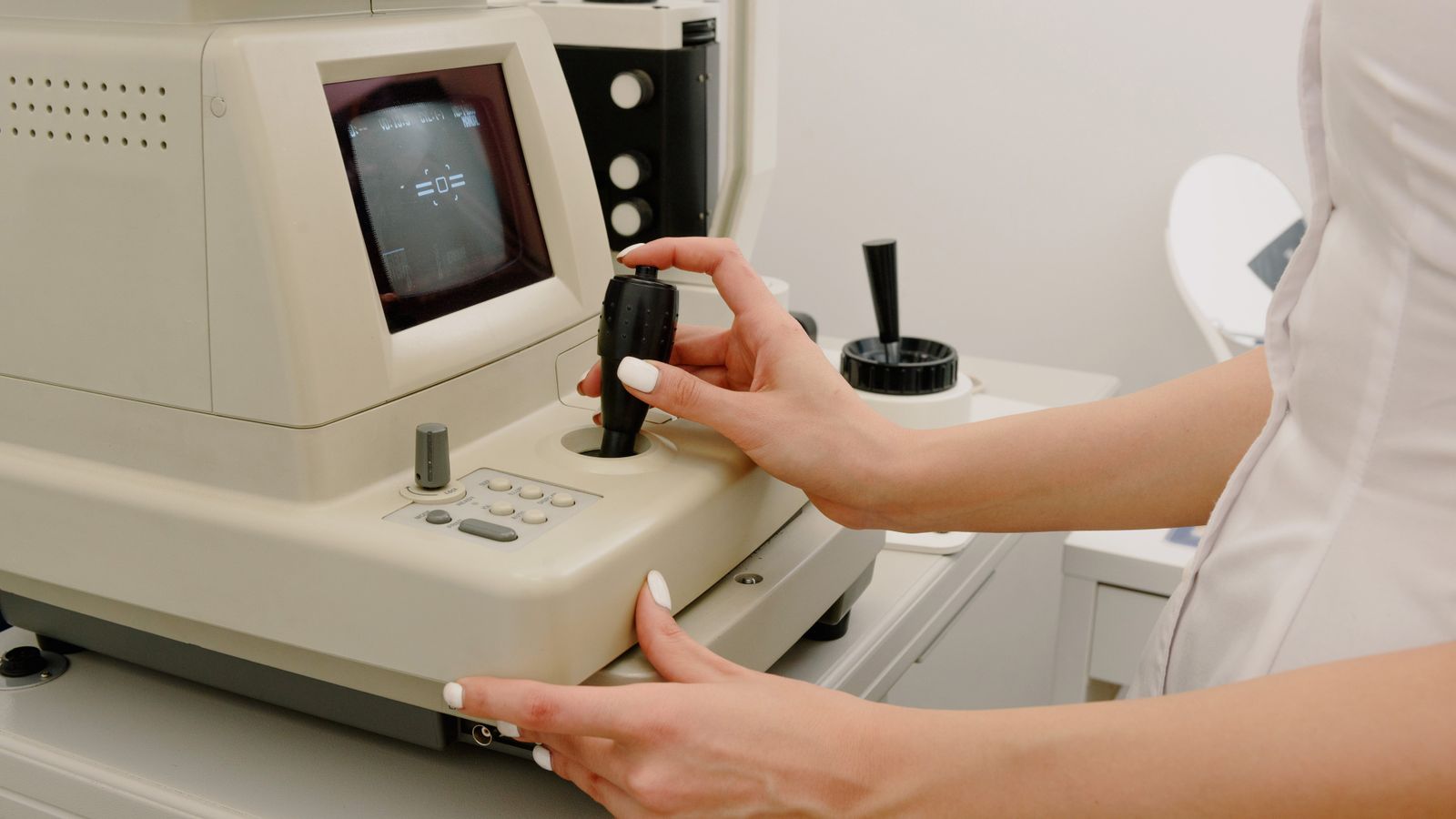
Retina is eye care's assembly line and its high-wire act at the same time. Injection clinics move patients at a pace no other subspecialty attempts, every encounter generates imaging that must be interpreted and documented, and the payer stakes per visit are among the highest in outpatient medicine. Documentation in that environment isn't a clerical afterthought — it's load-bearing. Which is exactly why retina practices have become some of the heaviest adopters of scribe support, increasingly in its virtual form.
A dedicated virtual scribe for optometry and ophthalmology can take documentation off the doctor's plate during the exam.
The retina documentation problem, specifically
Consider what a single injection visit requires in the chart: interval history, visual acuity, IOP, the OCT reviewed and its findings recorded, the clinical decision to treat documented with supporting rationale, the injection itself — drug, dose, eye, lot number where required, consent confirmation — and the follow-up interval with its reasoning. Multiply by an injection clinic's daily census, then layer on the payer dimension: anti-VEGF agents are expensive, authorizations recur monthly, and documentation that fails to support medical necessity puts five-figure claims at risk per patient per year.
Now note the structural irony. Retina encounters are brief and rhythmic — the doctor's clinical time per patient is minutes — so the documentation share of each encounter is proportionally enormous. A retina specialist who documents everything personally is spending a substantial fraction of the day typing sentences that are 90% identical to the last patient's, while the waiting room fills.
Why the rhythm suits scribes unusually well
That very repetitiveness is what makes retina the best-case scenario for scribe support. The encounter structure is consistent; the vocabulary set is deep but bounded; the doctor's phrasing patterns stabilize quickly. A trained scribe reaches full pace in a retina clinic faster than in almost any other eye care setting — and once there, keeps the note synchronized with a clinic velocity that would bury any doctor-as-typist workflow.
The virtual model adds the practical advantages retina groups care about: scribes trained specifically in retinal documentation are scarce in any local market, exam rooms in injection pods are cramped, and a remote scribe can follow one doctor across satellite offices — a fixture of retina practice — without windshield time.
What the scribe handles in an injection clinic
- Pre-clinic chart prep: treatment history, interval since last injection, prior OCT notes pulled forward for each scheduled patient
- Real-time documentation of interval history, findings, and the doctor's OCT read as it's verbalized
- Injection documentation to your protocol — agent, eye, sequence in the treat-and-extend plan, consent confirmation
- The follow-up plan with the interval rationale that authorization reviews look for
- Flagging documentation gaps — a missing consent, an auth expiring before the next scheduled injection — before they become billing problems
That last item is where scribing quietly overlaps revenue protection. In retina, a well-built note isn't just faster; it's the paperwork foundation under some of the practice's largest claims. Many groups pair the scribe with a remote prior-auth specialist for exactly this reason — the two roles guard opposite ends of the same pipeline. Our ophthalmology practice guides cover that pairing in detail.
What about ambient AI in retina?
Retina is arguably the hardest case for audio-only AI documentation, for the reason covered in our full AI-versus-human comparison: the decisive content of a retina visit — the OCT — is looked at, not talked about. A tool that hears "fluid's a little better, let's stay at eight weeks" cannot build the note that supports that decision. Some retina groups use AI drafts for history capture and let a human scribe own the exam, imaging, and plan; few who've tried it let software carry the note alone.
Sizing it for your group
The math is unusually easy to run in retina because the volumes are large and the encounter times are short. Take your average injection-clinic census, estimate the doctor-minutes per encounter currently spent documenting, and price those minutes at what your schedule earns when they're clinical instead. Against a virtual scribe's flat monthly cost, most high-volume retina practices find the question isn't whether the role pays for itself but why the clinic ran without it as long as it did.
If your group runs injection clinics across multiple sites and the doctors are still typing, that's the conversation to have — we're glad to walk through what coverage would look like across your schedule.