Patients confuse these two roles constantly, which is forgivable — both wear scrubs-adjacent attire in the same building and both help you see better. Practice owners occasionally confuse them too, which is less forgivable, because the roles live on opposite sides of the practice and hiring the wrong one leaves the actual bottleneck standing. Here's the comparison that sorts it.
If your practice is weighing remote support, our guide to virtual assistants for optometry practices covers the roles, training and cost in one place.
Different sides of the building
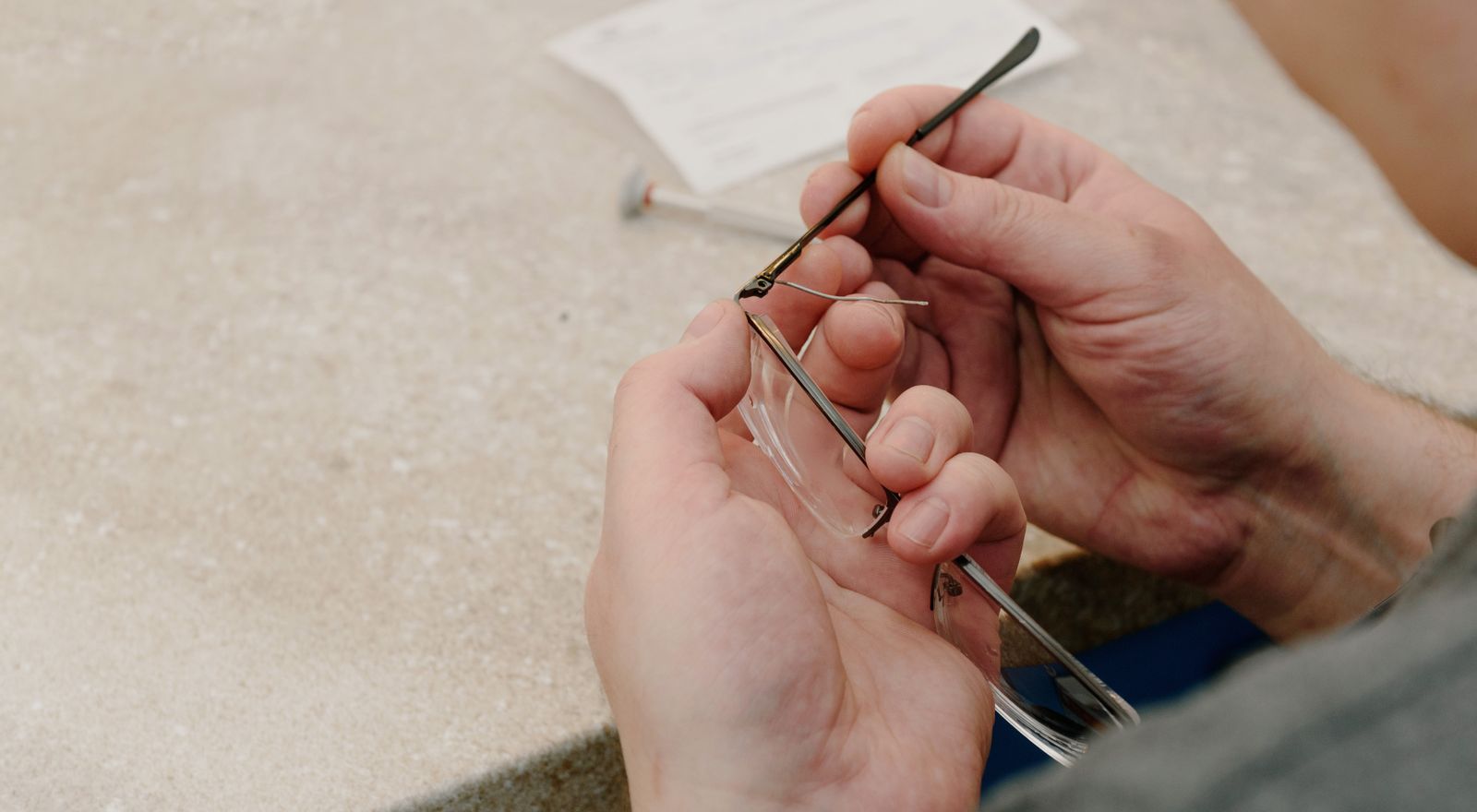
The optometric technician works the clinical side: pretesting, visual fields, OCT and imaging, contact lens teaching, medical-visit workups — feeding the exam lanes so the doctor's minutes go to doctoring. The optician works the optical side: interpreting the finished prescription, styling frames, taking measurements (PDs, seg heights), selecting lens designs and materials, ordering from the lab, dispensing, adjusting, and repairing. One prepares the patient for the doctor; the other turns the doctor's prescription into something the patient wears. The exam is the handoff point between them.
Training and licensure
The technician path is certification-based and voluntary in most settings — the AOA's paraoptometric ladder (CPO through CPOT), learned largely on the job. The optician path varies by state in a way that matters for hiring: roughly half of US states license opticians, requiring formal apprenticeship or opticianry programs and exams (ABO for spectacles, NCLE for contacts — credentials worth having even in unlicensed states). Check your state's rules before writing either job posting; in licensed states, the optician pipeline is structurally tighter.
Pay, briefly
The ranges overlap more than the roles do: both run from the high teens hourly at entry into the high twenties-to-thirties for experienced, credentialed staff, with market and setting doing their usual work. The optician's range carries a commission wrinkle — many practices pair a base wage with optical sales incentives, which can push strong dispensers above either role's base ceiling. Our technician salary guide covers the clinical side's numbers in depth.
Which hire moves your bottleneck
The diagnostic question isn't "which role is more valuable" — it's where your practice's throughput actually stalls. Patients backing up between check-in and the exam lane, doctors waiting on workups, fields and OCT queued into next week: that's a technician bottleneck. Patients wandering an unstaffed frame board, optical capture rate sagging, adjustment walk-ins hijacking sales conversations: optician bottleneck. Watch one busy day with fresh eyes — or pull the timestamps from your PM system — and the stall point is usually undeniable.
And apply the same audit our whole series keeps recommending before posting either job: how much of the imagined vacancy is actually administrative? A dispensary "needs another optician" surprisingly often because the current one spends ninety minutes a day on order-status calls, lab follow-ups, and reorder outreach — desk work a remote assistant handles at a fraction of an optician's rate, per our optical-support and cost-comparison guides. Evicting the desk work first sometimes dissolves the vacancy; it always clarifies what the real hire should be.
For the person choosing between the paths
Pick by temperament, honestly. The technician path rewards clinical curiosity — disease, diagnostics, the medical side of eye care — and ladders toward surgical and subspecialty settings. The opticianry path rewards craft and retail instincts — optics, style, the satisfaction of a perfectly fitted progressive — and ladders toward optical management and, for the entrepreneurial, ownership. Both sides are chronically understaffed; both pay a credentialed professional respectably; neither is going anywhere. The eye care labor market's best-kept secret is that its doors are wide open on both sides of the building.